
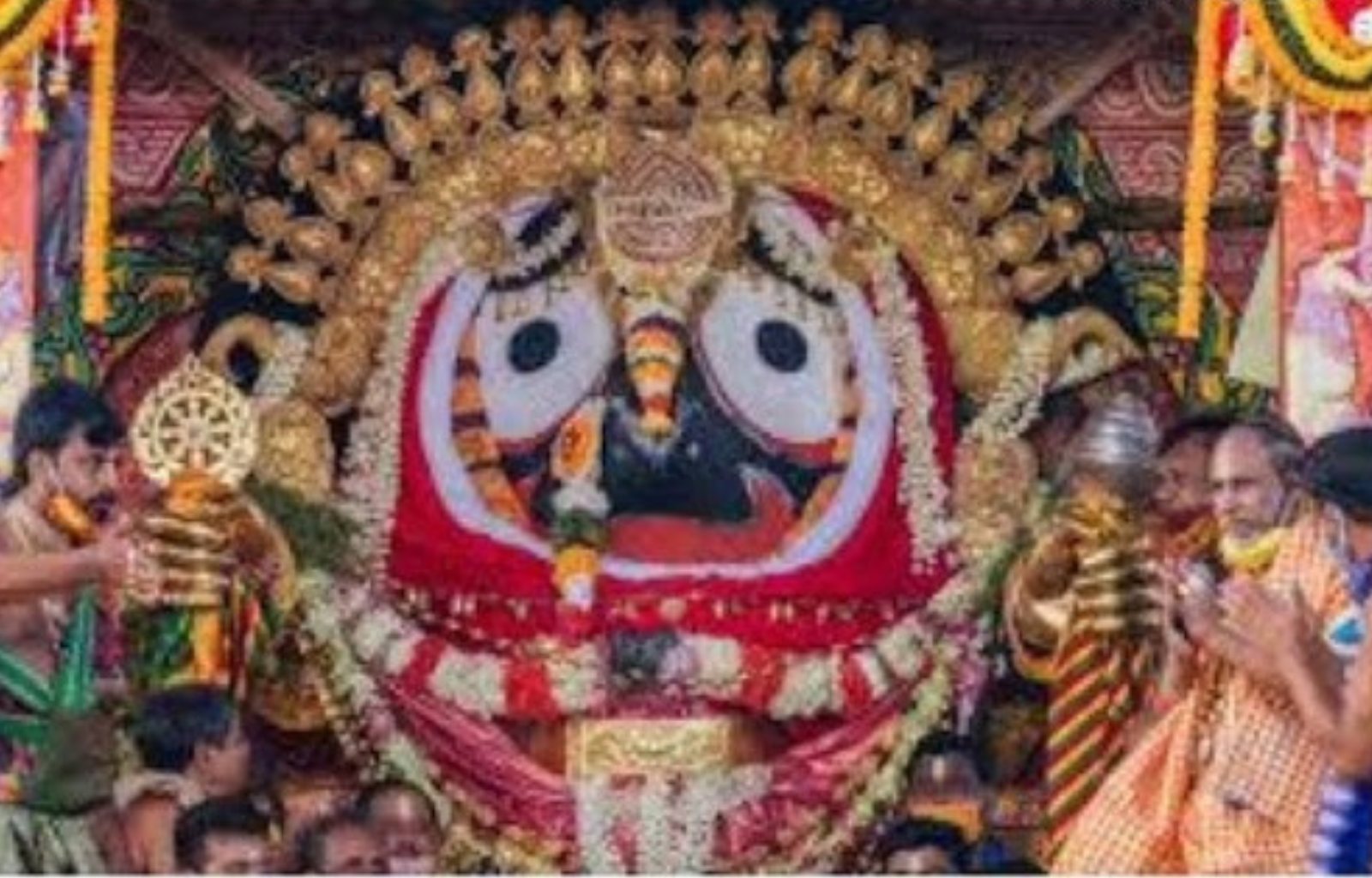
Lord Jagannath, one of the most revered deities in Hinduism, holds a unique place in the hearts of millions of devotees, especially in the eastern state of Odisha. More than just a religious icon, Jagannath is a symbol of universal love, inclusivity, and divine mystery. His history weaves a beautiful tapestry of faith, mythology, and cultural traditions that have transcended centuries, making him a timeless figure of spiritual devotion and legend.
Who is Lord Jagannath?
The name “Jagannath” translates to “Lord of the Universe” — an epithet that perfectly captures the expansive and all-encompassing nature of this deity. Jagannath is considered a form of Lord Vishnu or Lord Krishna, worshipped alongside his siblings Balabhadra (brother) and Subhadra (sister). Together, these three idols form the divine trinity at the famous Jagannath Temple in Puri, Odisha.
Unlike traditional Hindu idols made from stone or metal, the Jagannath idols are carved from sacred neem wood and are distinctly stylized with large, round eyes and no limbs — a representation that mystifies many but carries deep spiritual symbolism.
The Legendary Origins
The history of Lord Jagannath is shrouded in myth and legend, blending spiritual symbolism with cultural narratives:
- The Divine Woodcarving: Legend has it that the original idols were carved from a special neem tree, known as the Daru Brahma, found floating in the sea. A divine craftsman named Vishwakarma is believed to have carved the idols under the guidance of Lord Vishnu himself.
- The Incomplete Faces: The idols’ faces are intentionally incomplete, symbolizing that the divine is beyond human comprehension — incomplete to remind devotees that God’s true form is infinite and unknowable.
- Universal Appeal: Unlike many Hindu deities associated with specific sects or castes, Lord Jagannath’s worship is inclusive. He is revered by people from all walks of life, symbolizing unity beyond caste, creed, or religion.
The Spiritual and Cultural Significance

Lord Jagannath is more than a deity — he is a cultural icon embodying Odisha’s rich heritage and spiritual philosophy. His worship is deeply intertwined with the region’s identity, art, dance, music, and festivals.
The most iconic celebration associated with Lord Jagannath is the Ratha Yatra (Chariot Festival), where the deities are placed on massive wooden chariots and pulled through the streets of Puri by thousands of devotees. This festival symbolizes the Lord’s journey from his temple to his garden palace and emphasizes accessibility and the idea that the divine comes out to meet the people.
Unique Rituals and Traditions

Jagannath worship involves many unique rituals that set it apart:
- Nabakalebara: Every 12 to 19 years, the idols are ceremonially replaced with newly carved wooden ones in a secretive ritual called Nabakalebara (meaning “new body”). This ritual is filled with mystery and religious significance, highlighting the cyclical nature of life and death.
- Temple Kitchen (Rosha Ghara): The temple’s kitchen is legendary for cooking meals for tens of thousands of devotees daily using ancient methods — a testament to the communal and charitable spirit of Jagannath worship.
- Syncretic Traditions: Jagannath worship blends tribal customs with mainstream Hinduism, reflecting the deity’s universal appeal and the cultural melting pot of Odisha.
Lord Jagannath Beyond Odisha

The influence of Lord Jagannath extends far beyond Odisha’s borders. His worship has spread to other parts of India and internationally, especially through the International Society for Krishna Consciousness (ISKCON), which celebrates the Ratha Yatra festival worldwide. This global reach underscores Jagannath’s role as a symbol of universal brotherhood and spiritual unity.
Why Lord Jagannath’s Story Matters Today
In a world often divided by differences, Lord Jagannath stands as a beacon of inclusivity, devotion, and mystery. His worship reminds us that the divine transcends human boundaries and that faith can unite diverse communities through shared rituals and celebrations.
Conclusion
Lord Jagannath’s history is a fascinating blend of faith, mythology, and cultural richness. From his enigmatic wooden idols to the grand spectacle of the Ratha Yatra, the divine lord’s legacy is deeply etched in the spiritual and cultural fabric of India. As a symbol of universal love and mystery, Lord Jagannath continues to inspire millions, inviting all to partake in his timeless journey of devotion and unity.